Male or Female?
One of the first things to consider when deciding to get mice is whether you should get a male or females. Here are some of the key differences!
Males
Social Structure
Male mice are typically housed solitary, housed with female African soft-furred rats, or neutered and housed with females. Male mice cannot be housed with other male mice, as they will fight brutally, and often fatally.
Personality
Male mice are known to be lazier than female mice. They are also known to be more affectionate and enjoy more one-on-one time with their owners.
Smell
Male mice tend to have a stronger odor than female mice. It is often said that one male mouse smells significantly worse than a group of females. Therefore, they may not be good choices for those sensitive to smells.

Females
Social Structure
Female mice are heavily social, and must never be housed solitary. Instead, female mice must be housed in groups of at least 2, but ideally groups of 3+ for better social security.
Personality
Female mice are known to be more active and engaging than male mice. They may be preferable for owners who want to decorate fun enclosures and watch their mice explore.
Smell
Although all mice will have some amount of foul odor associated with their enclosure area, female mice tend to smell significantly less offensive than male mice do.
Male mice cannot typically be housed with other male mice due to aggression. Typically, once male mice hit maturity at between 8-12 weeks, they will become aggressive to those of the same sex- including littermates that they were previously raised with. This is simply the natural nature of male mice. Some breeders specifically work to "breed the aggression" out of male mice. However, whether or not these attempts have been entirely successful is much debated. It seems that all it takes is one overclean of an enclosure, or a male being temporarily isolated for medical purposes, for the male mice who had previously been living in harmony to turn on each other and begin brutally fighting once again. Additionally, it seems that breeding for reduced male-to-male aggression significantly decreases the fertility of males, to the point where many seem incapable of properly breeding. Therefore, these lines tend to burn themselves out quickly, and do not appear to be sustainable. It is also noted that some breeders claim to breed for male-to-male aggression, and yet adopters still note aggression and dominance behaviors between socially-housed males.
Most breeders do NOT breed for reduction of male-to-male aggression, due to the associated fertility issues. Therefore, unless your breeder has given you the specific go-ahead, you should always plan to house males separately. Additionally, if you do decide to get male mice from a breeder who claims to specialize in reduction of male-to-male aggression, you should always have a clear back-up plan, just in case things change suddenly. Once male mice begin to fight, the fighting will often escalate quickly.
When housed together, males will typically fight, and this fighting is often incredibly brutal and potentially fatal. Male mice often go into fights with the intention of seriously maiming, or even killing, the opposer- and sometimes, they are unfortunately successful. Common injuries due to socially-housed males include, but are not limited to: nicked, torn, or completely ripped off ears - deep wounds to the neck, chest, belly, and rump - serious wounds to the genital areas, including castration - serious injury to the tail, including degloving - among other serious injuries, and even death. Often times, even if a male mouse survives an altercation, he may require intensive veterinary intervention, which is often incredibly expensive and difficult to obtain.
Therefore, male mice are typically housed solitary. However, being social creatures, it is incredibly important to give solitary male mice lots of human affection on a regular basis. It is typically recommended to give your male mouse at least 15-30 minutes of one-on-one human social interaction per day if he is housed solitary. If you cannot provide lots of interaction for your male mouse, there may be other options for your situation. One option is to have your male mouse neutered by a licensed veterinarian, then house him with female mice. It is important to remember that male mice can still impregnate female mice once neutered for up to 2 months, so you should give your male mouse plenty of time to recover and rid himself of retained sperm before you place him with female mice, should you get him neutered. There are some less-than-ethical breeders and owners who may recommend banding your mouse as a cheap and easy neutering option. This is where a tight-fitting elastic band is wrapped around the testicles, causing blood circulation to cease and the testicles to eventually die and fall off- and is common practice with various livestock. However, mice have completely different reproductive systems than livestock, and therefore this is not an appropriate method for them. Banding is extremely painful for mice, and has a high rate of life-threatening complications, as mice will chew at the painful band and may end up severely injuring themself in the process.
Neutering isn't something to take lightly, however- it tends to be incredibly expensive, often costing hundreds of dollars. Additionally, even the best veterinarians cannot provide a risk-free neuter- mice are very small, sensitive animals and are extremely prone to anesthesia-related complications, as well as post-surgical complications (mice may chew at their incision, and it is impossible to place a cone-of-shame on a mouse). Neutering, even when performed by the best veterinarians, has an unfortunately high mortality rate. Therefore, neutering isn't always a good option for every owner or mouse. Another option is to house your male mouse with female African Soft-Furred Rats.
African Soft-Furred Rats are a very similar species to fancy mice, and tend to get along with them incredibly well. However, obtaining them may be difficult, or even illegal. In some areas, it is illegal to keep African Soft-Furred Rats and other rodents of African descent, so always check for local laws and regulations before you decide to add ASF Rats to your home. Additionally, in some areas, there are little to no breeders of ASF Rats. ASF Rats are almost always bred to be feeders, and are not domesticated like fancy mice are. Therefore, most are jumpy, bitey, or downright aggressive towards humans, which makes them poor choices for those with inexperience, or households with children.
Whether you have male mice or female mice, sometimes you will experience frustratingly-foul odors around your mouse's enclosure, causing a pestering smell in the room you house them in. The biggest mistake that new mouse owners tend to make when fighting odor is over-cleaning their mouse's enclosure. Mice have poor eyesight, and identify their enclosure and territory mostly by scent. Therefore, they mark their territories to feel comfortable and secure in their space. When placed in an enclosure that no longer smells like them, they may become stressed, and begin marking excessively. This is often the cause for the overwhelming foul odor that many new mouse owners complain of.
Instead of doing lots of deep-cleans of your mouse's enclosure, instead try this routine:
- Take a few handfuls of used bedding from your mouse's dirty enclosure, and set them to the side.
- Empty the leftover dirty bedding. Clean sides and accessories with a neutral cleaner that doesn't smell strongly of chemicals, such as hot water and vinegar. For especially tough areas, try a safe enzyme-based cleaner, such as poop dissolver, which is sold for birds.
- Check the wheel! Poop and pee on the wheel can stink up your entire enclosure, so if your mice have a habit of peeing and pooing on the wheel, try giving it a clean once every day or two to help keep your enclosure smelling fresh.
- Place new bedding and clean accessories back into the enclosure, and set-up the enclosure as usual.
- Toss the bit of used bedding you previously saved ALL over the enclosure to reintroduce some of your mouse's smell and make sure they feel comfortable in their environment, preventing overmarking behaviors.
- Consider opting for scent-absorbing beads or gels to put nearby your enclosure to help tackle bad odors.
- Remember: Never use air or fragrance sprays near your mouse's enclosure, or light candles or incense in the room with them; It could cause a respiratory illness, such as upper respiratory infection.
Female mice are incredibly social creatures- even more-so than their male counterparts. Therefore, it is incredibly important that they always have another mouse as a companion. Female mice should always be housed in groups of 2+. Ideally, they should be housed in groups of 3+, as these groups are more socially secure, and tend to thrive better.
However, there are some instances where a female mouse may need to be isolated temporarily. For instance, if a female mouse is experiencing symptoms of a contagious illness, she should be immediately isolated from the rest of her group in order to protect the rest of the group from threat of infection. Another example would be a female who has been injured or received surgery, and therefore needs to be isolated to recover properly. Under both of these circumstances, the female should be isolated for a short period of time until they are in better health, then properly re-introduced to the colony.
However, isolating a female permanently is never appropriate. Sometimes, well-meaning owners will isolate a female mouse who is displaying aggressive behaviors or fighting with her cage-mates. However, this is not an ethical circumstance for the isolated female. Sometimes, a female experiencing aggression can be calmed and properly re-introduced to her group. First, try these options :
- Completely re-do introductions, from the start. Deep clean the enclosure, removing all possible sources of smell. Place a small amount of vanilla extract in-between the shoulders of each mouse, if possible. Introduce the mice in a small, neutral area, such as a carrier. Allow them to stay together for awhile before moving them into their permanent enclosure.
- Try placing the aggressor with one other female mouse, preferably a rather docile one.
- Try downsizing the enclosure to prevent the formation of individual territories and territorial disputes.
- Try to identify any specific objects/accessories that the aggressor may be becoming defensive of, and remove them from the enclosure if identified, or in the case of necessary items such as water bottles, move them elsewhere in the enclosure.
If all else fails, and the female mouse cannot possibly be safely housed with other female mice, the most ethical option is often, unfortunately, euthanasia. It is not fair nor ethical for the aggressive female to live a life in isolation. She will become stressed, depressed, and unwell.
You should always introduce female mice in a neutral space; Never simply place new mice into an already established enclosure. Choose a small space, so that mice are practically forced to interact with one another, without being so cramped as to force mice to be climbing over each other or risk hurting each other on accident (which could cause a fight). Depending on the size of the group you are introducing, you can utilize a carrier, large critter keeper, or bin. Make sure that the introduction area you use is secure, so that mice do not escape. Use fresh bedding to eliminate any smells, and do not place any items in the introduction area that could smell of your old group.
For the first 30 minutes or so, allow your mice to meet each other. As long as all goes well, you can then introduce food and water to the introduction area. Always supervise mice while they are meeting each other for the first time, so that if a serious fight breaks out, you can split them up and attend to any potential injuries. After an hour or so of smooth sailing, you are likely safe to place mice in their main enclosure. However, make sure to deep clean the enclosure first, and do everything you can to eliminate scents in the old enclosure.
Some squabbling and dominance behavior is to be expected during introductions. However, you should become concerned if blood is drawn.

Types of Enclosures & Enclosure Sizing
Choosing the right enclosure, and size of enclosure, for your mouse/mice is crucial to taking good care of them. There are many factors that need to be considered.
Types of Enclosures

Top-Opening Aquariums
- Extremely secure. As long as you choose a proper lid, top-opening aquariums are nearly escape-proof.
- Clean and sleek; Aesthetically pleasing.
- Easy to clean and wipe down.
- Can fill with lots of bedding to provide crucial enrichment to your mice.
- Heavy, hard to lift, especially for those with physical disabilities or children.
- Taller tanks can have poor ventilation due to only having ventilation at the top.
- If dropped, will shatter completely and become unfixable and unusable.
- Can be difficult to attach accessories.
- Reaching from above can stress out especially flighty mice.

Front-Opening Terrariums
- Extremely secure. Nearly escape-proof.
- Clean and sleek; Aesthetically pleasing.
- Easy to clean and wipe down.
- Front-opening style makes scooping mice easy and helps prevent fear.
- Heavy, hard to lift, especially for those with physical disabilities or children.
- Taller tanks can have poor ventilation due to only having ventilation at the top.
- If dropped, will shatter completely and become unfixable and unusable.
- Can be difficult to attach accessories.
- Due to the placement of the doors, it can be difficult to add enough bedding. Bedding often falls on the floor when opened.

Barred Cage
- Easy to find in most pet stores.
- Lightweight and easy to lift.
- Easy to attach accessories using the bars.
- Bars give extra climbing enrichment for mice.
- Lots of ventilation.
- It is often difficult to find a barred cage that is both appropriately sized and has appropriate bar spacing. Most barred cages have bar spacing that is far too wide to securely house mice.
- Cleaning individual bars can prove difficult.
- Plastic bedding tray often does not hold enough bedding for appropriate burrowing, and bedding is often pushed out onto the floor.
- Plastic bedding tray is often not chew-proof, posing an escape risk.
- Not suitable for especially small mice, due to escape risk between bars.

DIY Bin Cage
- Lightweight and easy to lift.
- Nearly escape-proof if constructed properly.
- Lots of ventilation if constructed properly.
- Lots of room for bedding if constructed properly.
- Very customizable.
- Easier to add accessories than tanks.
- Easier to clean than barred cages.
- Requires some DIY skills and tools, which may cost more than a tank or barred cage to invest in if you did not already own them.
What About Enclosure Size?
Unlike most other species, mice are a species than benefits from a middle-ground enclosure. In most species, there is a set minimum enclosure size, and anything larger than that is considered as ideal, and better. Mice are a bit different, as an enclosure can be both too small OR too large. In too small of an enclosure, a mouse will become stressed and bored. But in too large of an enclosure, a mouse will also become stressed and uncomfortable. This can cause mice to be more susceptible to illness, and can cause fighting and dominance behaviors in groups of females.
So when is an enclosure too small, and when is an enclosure too large?
Well, the minimum enclosure size is considered to be 50-100 sq. inches per mouse, with a baseline starting minimum of 200 sq. inches (about the size of a 10 gallon tank). But finding a maximum size is significantly more difficult, and nuanced.
On account of scientific research/studies, and shared experiences between myself and multiple other reputable breeders, I have come to the following recommended tank sizes per amount of mice housed within. Some breeders recommend less for their specific lines, so always speak with your breeder on what they recommend. This guide is meant to be as broad as possible.
Square Inches of common aquariums, for reference :
10 Gallon - 213 Sq. Inches 20 Gallon Tall - 331 Sq. Inches
20 Gallon Long - 400 Sq. Inches 40 Gallon Breeder - 661 Sq. Inches
1 Male
Recommended Size : 200-400 Sq. Inches
Minimum : 200 Sq. Inches
Maximum : 400 Sq. Inches
2 Females
Recommended Size : 200-400 Sq. Inches
Minimum : 200 Sq. Inches
Maximum : 400 Sq. Inches
3 Females
Recommended Size : 300-400 Sq. Inches
Minimum : 200 Sq. Inches
Maximum : 500 Sq. Inches
4 Females
Recommended Size : 350-500 Sq. Inches
Minimum : 200 Sq. Inches
Maximum : 600 Sq. Inches
5 Females
Recommended Size : 400-600 Sq. Inches
Minimum : 250 Sq. Inches
Maximum : 675 Sq. Inches
6 Females
Recommended Size : 400-675 Sq. Inches
Minimum : 300 Sq. Inches
Maximum : 750 Sq. Inches
7 Females
Recommended Size : 500-700 Sq. Inches
Minimum : 350 Sq. Inches
Maximum : 800 Sq. Inches
8 Females
Recommended Size : 600-700 Sq. Inches
Minimum : 400 Sq. Inches
Maximum : 850 Sq. Inches
9 Females
Recommended Size : 675-750 Sq. Inches
Minimum : 450 Sq. Inches
Maximum : 900 Sq. Inches
10 Females
Recommended Size : 675-750 Sq. Inches
Minimum : 500 Sq. Inches
Maximum : 925 Sq. Inches
11 Females
Recommended Size : 675-750 Sq. Inches
Minimum : 550 Sq. Inches
Maximum : 950 Sq. Inches
12 Females
Recommended Size : 675-800 Sq. Inches
Minimum : 600 Sq. Inches
Maximum : 1,000 Sq. Inches
Making A Successful Enclosure
The enclosures pictured below are excellent examples of the "Gold Standard" of mouse enclosures in terms of clutter and enrichment. Additionally, the text below goes over some key components of what makes an enclosure enriching, exciting, and ideal for your mice!
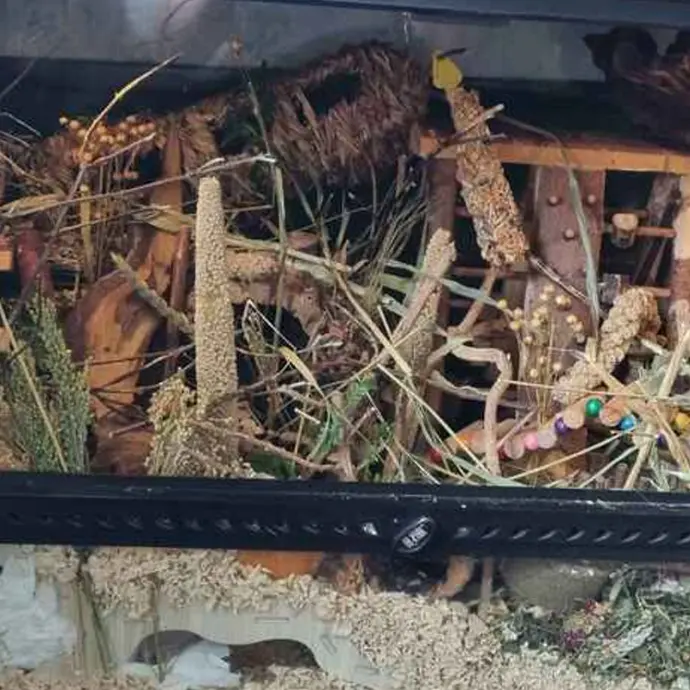
Clutter!
Clutter is extremely important in a mouse enclosure. Enclosures should be densely-packed and busy, and should never have any wide or open spaces. This is especially important for larger-sized enclosures. Providing ample clutter will keep your mice entertained, and ensure your mice always feel safe and secure. An enclosure that lacks clutter is an enclosure that mice may feel stressed inside.
Photo Credit : Mischief Mousery & Rescue
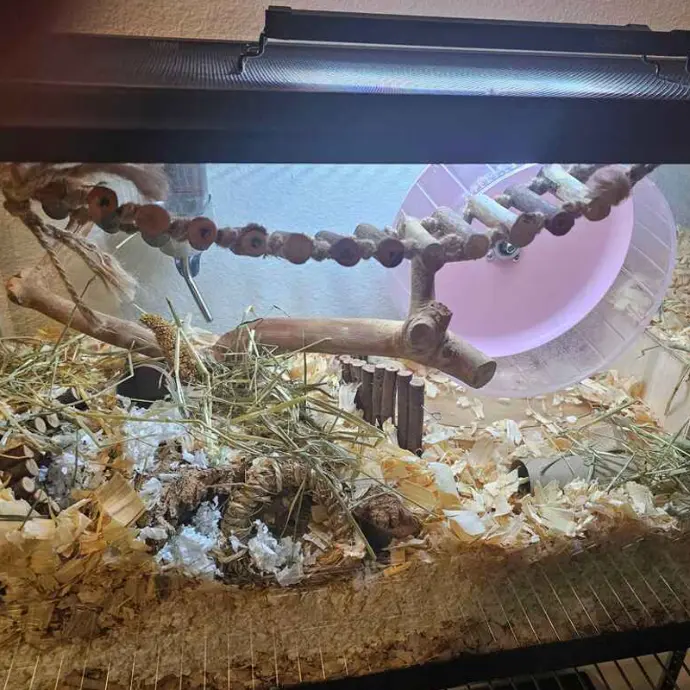
Climbing!
Mice love to climb! It is an excellent idea to add many safe climbing options for your mice to explore. Mice have excellent balance, and they like to show that off by navigating their busy enclosure with impressive ease. Allowing mice to climb allows them to express natural behaviors. Additionally, it provides challenge and exercise, keeping your mice happy, healthy, and in-shape.
Photo Credit : Me! (Voodoo Charm Mousery)
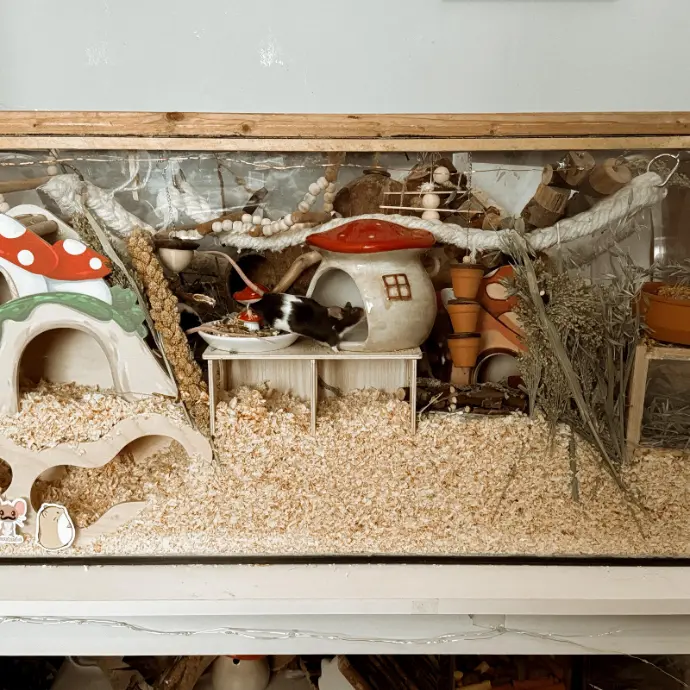
Hiding!
Mice are prey animals, and this means that even the most well-bred mouse is inherently skittish by nature. It is very important that mice are given plenty of opportunities to hide. The more secure places mice are offered, the less mice feel like they need to stuff themselves away. If they feel as though they can easily access a place to hide, they will feel less threatened and be less likely to dart away.
Photo Credit : @FlakyConcert425 (Reddit User)
What are some items that can be used to provide clutter, climbing, and hiding enrichment?
With mice, it is easy to be inventive. Many owners create their own DIY hides, climbing frames, and accessories out of cardboard, jute rope, and other safe materials. Here are some examples of items on the market you can use for enrichment!
Safe and sanitized driftwood, cork logs, cork bark, and other wooden materials offer enrichment and an opportunity to chew.
Terracotta and ceramic pots can be turned on their side, providing safe and aesthetically pleasing hiding spaces.
Hanging hammocks, made of fleece or similar materials, can be hung from the top of the enclosure, giving your mice a comfortable area to sleep and climb; However, they may become saturated in urine and feces and require regular cleaning, or be chewed and need replaced relatively often,
Utilize toys made for other species! Plenty of accessories sold for birds can be used, such as climbing frames, hanging toys, natural perches, and more. Additionally, sometimes items sold for reptiles and aquatics can be used as well. Just make sure all materials used are safe for mice, and you don't need to stick to the small animal section!
Reduce, reuse, and recycle! Cardboard is an amazing resource and can be tossed in a cage as a quick and easy hiding opportunity; Plus, it's fun for your mice to chew! If you want to get creative, cardboard can be used to create hides, multichambered mazes, ladders, bridges, and more! Mice love paper towel and toilet paper rolls, and they can be partially buried in bedding to create a "starting point" for a burrow. You can also stuff cardboard with treats to give your mouse feeding-based enrichment, making them work for their snacks!
Other items that can be used: Coconut nests, bird nesting boxes, birdhouses, dowels, applewood and willow sticks, wicker/rattan balls, pinecones (sanitized), lava ledges, rope perches, bird ladders, tissues and toilet paper for shredding, and so much more!
Quick Tip!
For extra enrichment, clutter, and fun, try adding hay and/or natural sprays to your enclosure! Although mice do not eat hay like rabbits or guinea pigs, they do enjoy chewing it, playing in it, and using it to build nests. Tossing a few handfuls of hay within your enclosure can add additional clutter to your enclosure in a very natural way, and allow your mice to utilize it for nest-building activities. Because mice do not eat the hay, you can use any hay you'd like as long as it is sold for use with small pets (to ensure it is free of bugs and debris), including timothy, alfalfa, or orchard grass. Additionally, you do not use very much of it, so one small bag will last for ages, and it ends up being a rather inexpensive investment! Natural sprays, including millets, grains, flowers, and herbs give your mouse a snack that they would encounter in their natural environment! It adds additional coverage and clutter to your enclosure, allows for natural and healthy variance in your mouse's diet, and requires your mouse to naturally forage for food just like they would in the wild! Just remember to limit sprays and ensure they aren't the only thing your mouse is eating, especially in mice who struggle with obesity or picky eating.

Wheels are an amazing addition to any mouse enclosure, as they provide your mouse the ability to exercise and run as fast as they'd like, whenever they like! However, if you wish to provide a wheel, it is important to select an appropriate wheel for your mice.
First, consider the type of wheels available. There are primary two types of wheels; Upright wheels, and "flying saucer" wheels. There are some reports of issues caused by saucer wheels. This is because saucer wheels tend to force the mouse to run sideways, causing some curvature to the spine, which could be associated with the same spinal issues as an upright wheel that is too small. However, there have yet to be any direct studies based on potential risks associated with saucer wheels. To be preventative, we recommend against using saucer wheels, and to instead opt for an appropriately-sized upright wheel.
So what exactly makes an upright wheel appropriate? First, you should use a wheel that is solid. Some wheels on the market have bars or grates, which leaves mice the potential to get their nails or toes caught within, causing serious injury. You should always select a solid wheel to avoid this. You should also avoid any wheels with crossbars, especially if you have a group of mice, as this can cause injury as well. Next, your wheel needs to be the right size. For most mice, the minimum size is 8-10 inches in diameter. However, for some larger show lines of mice, a 12 inch diameter wheel may be in order. When analyzing if your wheel is large enough for your mouse, observe when they are running on their wheel to see if their spine curves at all. The mouse's entire back, and first half of their tail, should be mostly straight. It is acceptable to have a little bit of curve towards the middle and end of the tail. If you are concerned about the size of your mouse's wheel, just go bigger! There is no such thing as a wheel that is too big as long as your mouse is capable of moving it. This is unlikely to ever be an issue as long as the wheel isn't larger than 12 inches in diameter, which tends to be the absolute largest size necessary, anyways.
If the wheel you are using is too small, it can be incredibly dangerous for your mouse. Over time, damage to the spinal cord can occur, causing pain and mobility issues. Mice can additionally develop a spinal condition called "wheel tail", which causes the wheel to curl improperly over the back, like a husky dog's tail. Even if the improperly sized wheel is removed, the tail will continue to degrade further down the spinal cord. Over time, this degradation can even cause paralysis. Remember; It is never acceptable to use a wheel that is too small for your mouse, and it is ALWAYS better to not use any wheel at all as opposed to a wheel that is too small or unsafe.
Now, what materials should your mouse's wheel be made out of? The basic answer is, something durable and easy to clean. The most common materials are plastic, wood, or acrylic. Acrylic tends to be the best option. It is incredibly durable and long-lasting, and very unlikely to ever need to be replaced. It is mostly chew-proof, extremely easy to clean, and doesn't absorb any pee or poo. Due to their higher quality, they tend to be silent, as well. However, it tends to be an expensive first-time investment. Plastic is also a reliable choice. It is not as durable, and is not chew-proof. Over time, it will begin to wear down, and absorb urine, so it needs to replaced every couple years. However, it is affordable, and also easy to clean and keep sanitary. Wood is a common material used with hamsters, but is typically a bad choice for mice. Mice are extremely likely to pee and poo on their wheel, and the urine and feces will leech into the wood and be difficult to clean. This will make the wheel unsanitary to run on, which could contribute to bumblefoot and similar infections. Additionally, it isn't just not chew-proof- being made of wood, it directly encourages the chewing.
Free-roaming is by no means necessary to keep your mouse happy or healthy. It is typically better to directly handle your mouse rather than allow roaming. However, if you insist on free-roaming your mouse, you need to take careful consideration of their temperament. Many mice are stressed by free-roaming, as it is an unfamiliar location. They may immediately dart under furniture or appliances, making them near impossible to catch. This can be extremely dangerous for your mouse, and potentially cause harm to appliances, as mice can be known to chew on electrical cords, baseboards, and walls, causing property damage.
Therefore, if you insist on free-roaming your mouse, it should be done in a secure location. Allowing your mouse to simply roam around the home is not safe nor practical. Instead, opt for a secure large play pen, or carefully block off a small room like a closet. Carefully consider if there are any furniture items, appliances, holes in walls, or other areas your mouse could gain access to, that could cause your mouse danger or be difficult to retrieve your mouse from. You should also ensure there are no chemicals, such as cleaning agents, insect baits, or other potentially dangerous substances. Carefully and securely block off any exit points your mouse could find. Remember; Mice are capable of squeezing through shockingly small spaces. If they can fit their muzzle through, they can likely fit their entire body through! Again, the safest way to free-roam your mouse is to only free-roam your mouse in a secure playpen with direct supervision at all times while they are out. However, it is an excellent idea to instead focus on your mouse's enclosure, providing new and exciting enrichment to explore. This will keep your mouse active, engaged, enriched, AND safe! This will also prevent your mouse from becoming stressed or uncomfortable due to not recognizing their surroundings. Additionally, if you do free-roam your mouse, all free-roam should be ceased if your mouse displays any signs of stress, such as hiding, squinting, jumping, squeaking, or any other negative/fearful behaviors.
So what about exercise balls? Won't exercise balls keep your mouse safe?
Although exercise balls do prevent your mouse from getting loose, or getting into locations they should not be, they come equally with their own set of dangers. Exercise balls feature multiple small slits along their sides. This is designed to provide ventilation and allow the mouse inside to breathe. However, these slits do not provide nearly enough ventilation for a mouse, so the air inside will become warm, damp, and muggy the more time your mouse spends inside. Additionally, due to lack of bedding to absorb pee and poo, and lack of ventilation, the pee and poo that your mouse produces will become sickening ammonia within the ball, raising your mouse's chances of becoming sick, such as developing a URI (upper respiratory infection).
Although they do not provide appropriate ventilation, these slits do provide something else- a possible danger for your mouse. These small, narrow slits provide the perfect place for your mouse's nails, toes, and tip of the tail to become lodged, and potentially be ripped off, causing severe injury. Couple these injuries with the amount of moist air, urine, feces, and ammonia in the ball, and you'll also see a severe risk of infection emerge.
Lastly, these exercise balls are not pleasant for your mouse to be inside; They may be silly and enjoyable for you to watch, but your mouse is not enjoying the experience. Mice have extremely limited eyesight, and navigate their world mostly with their whiskers and sense of smell. Due to the ball, they are unable to feel their surroundings with their whiskers, or scent out their surroundings. The ball, being only semi-transparent, removes the rest of their vision ability they did have, making them completely blind. Most exercise balls also do not allocate enough space for a mouse's spine and tail, and just like an improperly sized wheel, this can cause spinal damage over time.
Already bought an exercise ball? Repurpose it! By sealing off the slits and hanging an open exercise ball from the top of your cage, you can create a fun hanging retreat for your mice to enjoy!
The best bedding for your mouse is typically a safe, shavings-based bedding sold for use with small animals. But why are shavings-based beddings better than paper-based alternatives? Aren't shavings unsafe, or even toxic?
There are unfortunately many misconceptions spread about wooden shavings and their use with mice, rats, hamsters, and other small animals. The reality is this- there is absolutely no scientific evidence to support that shavings-based beddings are unsafe, or otherwise bad to use, with small animals, including mice. In fact, research tends to show the opposite! Many misconceptions about shavings are based around factual information about specific types of shavings; Namely, cedar-based shavings. Cedar shavings ARE incredibly unsafe to use with mice, and shouldn't be used with them under any circumstances. Additionally, many beddings labeled as "softwood blends" also contain cedar wood, which also makes them unsafe to use. This is because cedar wood contains oils and phenols which are toxic in mice (and many other small animals). This can cause respiratory distress and neurological damages.
However, other shavings-based beddings, such as pine, aspen, and hemp, do not suffer from these issues. Many people incorrectly believe that pine is also dangerous, alike cedar. This is again a misconception, based on two key points; Many softwood blends, which are primarily based with pine (usually), also typically contain trace amounts of cedar. Because of this, many people associate pine with toxicity, even though the true offender is the cedar, which they often do not know is in there. Because of this, when using pine, you should only use beddings clearly labeled as "pine shavings", not softwood shavings or softwood blends. Additionally, pine can contain trace oils and phenols if it is not dried correctly. Luckily, these oils and phenols are very easily removed when pine is kiln-dried. In the USA, all pine shavings sold for use with animals and livestock is kiln-dried; Therefore, any pine shavings you buy in the USA are completely safe!
But why not use paper-based beddings, just to be safe?
Because paper-based beddings come with lots of concerns! Paper-based beddings tend to be extremely dusty, which can cause respiratory distress in mice, and lead to respiratory issues such as URI (upper respiratory infection). Additionally, unlike shavings, paper does not absorb ammonia. Shavings soak in the ammonia, and dry it out, meaning that as long as you keep your enclosure cleaned properly, ammonia will not build up. However, with paper-based beddings, the paper instead simply becomes saturated in urine and feces. There is no absorption process that removes ammonia, so ammonia builds up. This ammonia is harsh and toxic, and can cause serious issues for your mice, and again, contribute to respiratory distress and URIs.
It is acceptable to use a small amount of paper bedding in your mouse's enclosure, not to exceed around 30% of total bedding coverage. Some paper can be used to give mice more nest-building materials, and help burrows hold shape. Many mouse owners will layer paper bedding underneath and above two layers of shavings, creating a sort of oreo-like appearance- Shavings on top, paper in the middle, and shavings again at the bottom! It is important to ensure that areas where your mice are likely to urinate and defecate, such as in corners and around commonly-utilized hiding spots, have a good layer of shavings to absorb any potential ammonia.
So what about bioactive?
Many people, especially those who have previously owned reptiles, aquatics, or plants, express interest in creating a bioactive mouse enclosure when they are first interested in mice. However, there are a few key reasons why "bioactive" mouse enclosures are not recommended, and may even be unsafe for your mouse. First, in order to create a bioactive enclosure, you must use a soil-based bedding. These beddings are just glorified dirt, which is really just glorified dust. These are not appropriate for mice, who should be on a bedding that is as dust-free as possible. Living on soil-based beddings will nearly guarantee respiratory issues such as URIs. Additionally, mice produce far too much waste and ammonia to ever safely live in a bioactive enclosure- there is no "clean-up crew" that can put up with the amount of waste they produce. The enclosure will quickly become unsanitary, and therefore unsafe for your mouse to live in. There are alternatives to bioactive enclosures! You can create a beautiful naturalistic look even with shavings-based beddings by using natural accessories, such as driftwood, cork logs and bark, hay, and natural sprays, which can create the natural bioactive look many owners wish for. You can also provide occasional access to a small container of soil-based bedding for your mouse to dig in and explore- though this shouldn't be 24/7. These are often called dig boxes, and can be an enriching occasional activity. If you are simply looking for a low-maintenance enclosure that you do not often need to clean, mice may simply not be the pet for you, as they tend to be a lot of keep up with in terms of cleanliness. You may instead be interested in reptiles, insects, arachnids, and aquatics- most of which often can have a low-maintenance bioactive set-up, if done correctly!
Once you've selected a bedding, you may be wondering how much exactly you should use. Typically, the more the merrier! Deeper bedding allows mice more opportunities to dig, burrow, and create complex tunnelling systems. Also, it gives ammonia more space to soak in and be absorbed, keeping your enclosure cleaner and more sanitary- which will reduce foul odors for you, and keep your mice healthier and happier! You should always use a minimum of 3 inches of bedding, though at least 5 inches is ideal. And, again, the more bedding you add, the better!
Alike most other rodents, mice have constantly growing incisors. This means that unlike most animals, their teeth continue to grow constantly as they age, and do not stop doing so. It is important to provide hard chews for your mouse to grind down these constantly-growing incisors. This can be done by providing materials like cardboard, and especially like wood. It is typically recommended to have at least one wooden item, in an easy to access location, for your mouse to chew on, per mouse, in any given enclosure.
If you do not provide enough opportunities for your mouse to chew, your mouse will be unable to grind down these constantly-growing incisors. Therefore, these incisors will over-grow. When the incisors become overgrown, it will cause the mouse discomfort, and possibly pain. It will only escalate from there, as the more overgrown the incisors become, the harder it will be for the mouse to find opportunities to chew. The mouse will begin to have difficulty eating, and may turn away from eating and drinking altogether as the area becomes more painful. This can quickly escalate into an emergency, as mice become malnourished and dehydrated extremely quickly due to their fast metabolisms. The teeth can even begin to grow into the mouth.
Once the teeth become overgrown, the only solution is to have the teeth manually grinded down by a licensed veterinarian. This will typically require a mouse to undergo anesthesia, which is rather dangerous for small animals such as mice. Therefore, it is extremely important to be proactive, and to prevent the teeth from becoming overgrown in the first place by providing plenty of chewing opportunities.
What Should I Feed My Mouse? A Diet Deep Dive.
It is no secret that better food = a better life. Your mouse's diet is arguably the most important part of its health. It doesn't matter how enriching your enclosure is; If your mouse has a poor diet, they will have poor health.
So what exactly makes a good diet? If your mouse is not a breeding mouse, and is instead just a pet, you should shoot for a diet that is 14-16% Protein, and 4-6% fat. The best diets are comprised of mainly healthy grains and seeds, as well as some amount of insect matter, as this is what mice would naturally eat. Animal proteins should be mostly avoided- especially red meats such as beef, pork, and lamb.
Fresh fruits and vegetables can be provided occasionally. However, unlike rabbits, guinea pigs, and similar small animals, mice are very sensitive to an overabundance of vegetation. It is recommended to never give your mice leafy greens, such as lettuce, kale, or cabbage, as these may cause wet-tail (loose stools).
Instead, some good options for fresh vegetables are cucumber, zucchini, squash, carrots, and peas. Avoid anything that may be spicy, such as peppers, as mice can be especially sensitive to this, both in taste and in gastrointestinal disturbances.
Fruit is high in sugar, so should only be given in absolute moderation.
If you are noticing symptoms of gastrointestinal distress, such as wet tail or disinterest in food, decrease or completely eliminate use of fresh vegetables and fruits. Mice do not require fresh vegetables or fruits to thrive, and if they are causing issues in your mice, they should be avoided.
There are two main options for your staple diet; Pellet-based or mix-based diets. Pellet-based diets are formulated, balanced, complete rodent feed. However, they can be boring and lack variety if they are all your mice eat. Mix-based diets are typically comprised of a variety of loose ingredients. They allow your mouse more natural variety in their diet, and keep your mouse engaged, especially when scatter-fed. However, they also tend not to be as nutrition-dense, and some mice will be picky and only eat the tastiest bits, which can contribute to obesity. They are also prone to being filled with low-quality ingredients or ingredients that should only be fed in moderation, such as raisins and nuts. There are no commonly available mix-based diets in the USA that are proper for mice. Most contain too many poor quality ingredients, or incorrect values. The best diet for mice is often considered as half pellet-based diet, and half mix-based diet of the highest quality you can find.
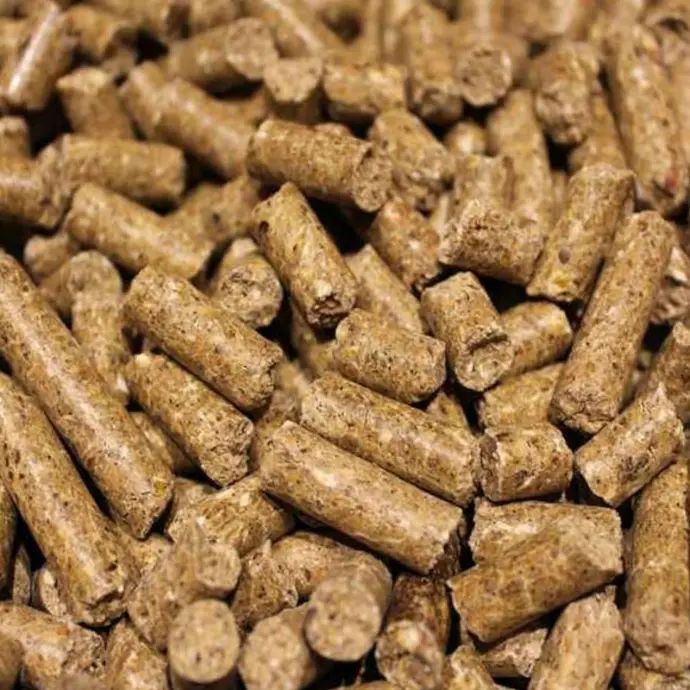
Pellet-Based Diet
Nutritionally-dense, complete and balanced food for rodents, similar to kibble for dogs. Perfectly fortified to keep mice happy and healthy, and eliminates risk of picky eating. However, feeding exclusively pellet-based diets is often seen as "boring". Mice who struggle with obesity tend to do best on pellet-based diets only.

Do Both!
The best diet is often considered to be a mixture of both high-quality pellet-based diet, and a mix-based diet. This ensures mice get all their essential nutrients, while also providing an enriching blend of foods. Here are our personal favorite brands of pellet-based and mix-based diets that we have used! Pick one of each to make the perfect diet.
Pellet-Based Diets
- Science Selective Rat & Mouse Food
- Oxbow Essentials Adult Rat Food (Yes, over Young Rat & Mouse, which is too high in Protein!)
- Kaytee Field + Forest Rat Food
Mix-Based Diets
- Tiny Friends Farm Reggie Rat & Mimi Mouse Food
- Vita Smart Forage Blend Rat, Mouse, & Gerbil Food
There are also many sellers on Etsy and similar sites who sell custom mixes, which may be high quality. However, never trust a seller who does not disclose ALL nutrient information, including ALL nutrition percentages and ALL ingredients.
We also make and sell our own custom mix! Including both pellet-based and mix-based ingredients, it is formulated AND enriching. Reach out for more information, if you are interested!

Mix-Based Diet
Made of a mixture of loose ingredients, mix-based diets create an enriching food that provides lots of variety. However, on their own, they tend not to be an appropriate diet. Many are not well formulated or contain too many poor quality and filler ingredients, or are high in sugar and fat. Even the ones that contain pellets, often contain pellets of very subpar quality.
Scatter-feeding, as opposed to presenting food in a bowl, encourages foraging and keeps mice enriched!
Water Bottle or Bowl?
Learn the Pros and Cons to both.

Water Bottle
Water bottles are extremely sanitary- with proper cleaning, they do not harbor much bacteria. It prevents mice from placing urine, feces, food, or bedding into their water, contaminating it. Leaks are possible, but unlikely as long as the bottle is filled properly and in good condition. Unlike a bowl, the bottle cannot be tipped and spilled.
Bottles are often said to be more unnatural. Some also claim that mice drink less from bottles than from bowls; However, there is no scientific evidence to back this claim up.
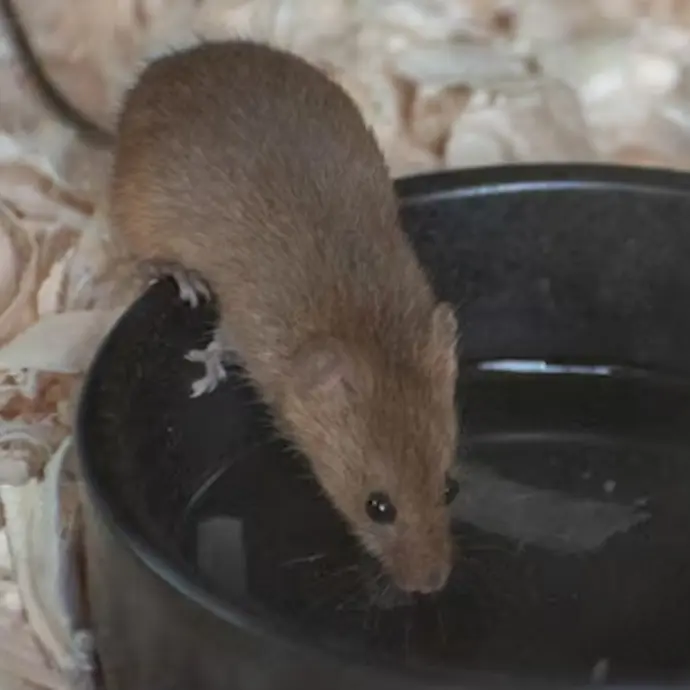
Water Bowl
Water bowls are said to be more natural than bottles, as they allow mice to drink water as they would in the wild.
There are a few potential dangers associated with use of water bowls. Mice may tip, or bury, their water bowl. This can cause water to spill, which may cause the mouse to become wet. A mouse could also fall in, becoming wet. When mice are wet, they are prone to hypothermia and similar issues. Additionally, mice may urinate or defecate in their water bowls. They may place bedding, pieces of food, or pieces of chewed-up accessories into their water bowl, which may contaminate the water and grow bacteria, making it unsafe to drink or causing mice to refuse to drink it altogether (mice can become dehydrated extremely quickly, within short hours).

A Note On Torpor
Torpor is a phenomenon often not spoken about when researching mouse care, but it is incredibly important to know about. Torpor is essentially short-term hibernation- however, unlike hibernation, it is not an entirely natural process for mice to go through. Rather, it is strictly a desperate survival instinct.
So why do mice go into torpor, and what happens when they do?
Mice may go into torpor due to restricted access to food or water, or because the temperature of their surroundings has become too cold for them to comfortably tolerate. Mice can become malnourished and dehydrated extremely quickly due to their very fast metabolisms. Because of this, mice may go into torpor before you've even realized they've lost weight from not eating properly.
When torpor occurs, a mouse's body temperature drops rapidly, and they become heavily lethargic. Mice in torpor will be cool to the touch, and will be floppy and atypical of their regular behaviors. In severe cases, mice may even seem dead, aside from their breathing- which may be slower than usual. Unless they are "snapped out of it", mice will continue to be in torpor, and will not eat or drink. This will further contribute to their malnutrition and dehydration, and they may quickly succumb, and pass away.
Because of this, if you notice your mouse in torpor, you need to immediately help them. Try to get them warm by using a space heater, and rub or pet it gently. The mouse should begin to perk up within a few minutes. If they do not, it is time to seek immediate veterinary care. Once the mouse begins to perk up, immediately offer easily accessible clean water, and food that your mouse likes. If your mouse continues to refuse food or water, again, it is time to seek immediate veterinary care.
To avoid torpor, always ensure your mouse has access to plenty of food and to plenty of clean water. It is never appropriate to restrict your mouse's access to food or water, unless under the direct orders of a licensed veterinarian. Many well-meaning mouse owners will restrict their mouse's access to food as a means to "diet" their mouse and encourage weight loss on obese mice. This is not an appropriate method. Instead, provide more exercise opportunities, cut down on treats, and consider switching to an all pellet-based diet. And remember; Yellow and brindle mice are genetically prone to obesity, and may be unable to loose a proper amount of weight without becoming sick and malnourished.
When Should I Contact A Veterinarian?
Sometimes, your mouse may become sick or injured. Being able to determine when something is wrong is the first step in getting your mouse back to feeling their best. This is, of course, not an all-inclusive list of all symptoms possible in a sick or injured mouse. If you are concerned about your mouse's behavior, you should always contact a licensed veterinarian. It is best to find a veterinarian who sees mice BEFORE your mouse becomes sick or injured. Not all veterinarians will see mice, and mice can go downhill extremely quickly when they are sick or injured. Already knowing who to call, and where to go, can save precious minutes, and potentially save your mouse's life in the case it experiences a medical emergency.
Fur Loss
Fur loss, especially when accompanied by skin irritation, scabbing, and itching, may indicate external parasites, skin infections, or dermatitis.
Sneezing or Troubled Breathing
Sneezing is very atypical of healthy mice, as is squeaky, clicky, or otherwise labored breathing. This may indicate a URI or similar respiratory illness.
Spinning or Disorientation
Often presented in a mouse looking as though it is chasing its tail, or wobbling. May be a sign of an inner ear infection, or neurological disorder.
Eye Discharge, Crust, or Squinting
Crustiness, discharge around the eyes or nose, and squinting could be signs of an eye infection or URI.
Movement Issues
Not using one or more limbs, or favoring one limb over the other, could be a sign of a painful injury, such as a bone fracture. A mouse who appears fully or partially paralyzed is an immediate medical emergency.
Refusal to Eat or Drink
Mice may not eat or drink much, or may only eat treats. This could be a sign of a gastrointestinal issue. Refusal to eat or drink anything is an immediate medical emergency.
Changes in Behavior
Mice who are typically friendly, but become flighty or aggressive (or the opposite situation) may be experiencing neurological issues.
Bleeding From the Eyes, Nose, Genitals or Rectum
These can be signs of an internal tumor placing pressure on internal organs, or, in the case of the genitals or rectum, a prolapse. This is an immediate medical emergency.
Lumps, Bumps, and Growths
Mice are extremely prone to tumors, which can be cancerous. They may grow, placing pressure on internal organs or risking a rupture.
Genital Issues (Male)
In male mice, this may display as a penis that will not go back into the sheath, or a crustiness, especially towards the end of the genitals. This can be a sign of a urinary blockage. This is an immediate medical emergency, especially if the mouse cannot urinate.
Genital Issues (Female)
In female mice, this may display as severe redness, blood, or swelling, which may be indicative of a prolapse. It could also present as a cloudy or white discharge, which may be indicative of infection in the uterine or reproductive tract. This is an immediate medical emergency.
Lethargy, Inactivity
Mice who are weak, unresponsive, or "floppy" could be experiencing torpor. They may also be experiencing organ failure. This is an immediate medical emergency.
Most mice should be at BC3. Brindle mice (or mice who are brindle underneath their shown coloration) may reach BC4 at their "healthy weight" due to genetic obesity. If your mouse reaches BC5, and you are feeding a regular diet, you should involve a veterinarian; Dieting your mouse by restricting access to food can be dangerous, and additionally, their may be other causes.

New Mouse Shopping List
Looking to get your set-up ready for mice? Here's what you'll need to get started!